
Alluvi NAD+ Pen 1000mg
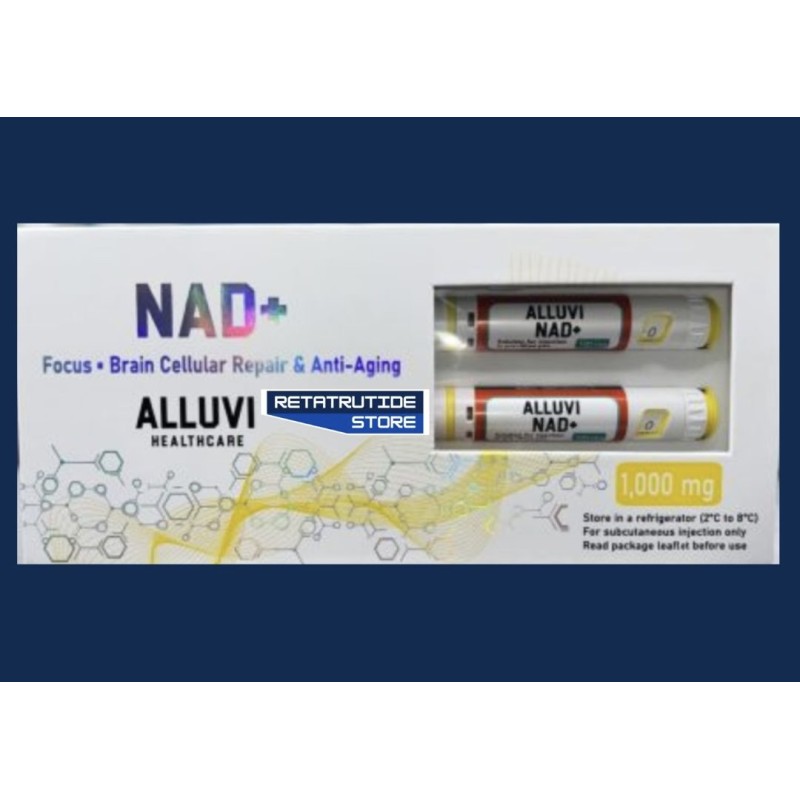
Alluvi NAD+ Pen 1000mg
- Brand: Alluvi
- Product Code: ALLUVI-NAD-1000MG
- Availability: Out Of Stock
-
£175.00
Alluvi NAD+ Pen 1000mg
Alluvi NAD+ Pen 1000mg is a high-concentration coenzyme preparation supplied in a precision pre-filled pen format designed for structured laboratory and analytical environments. Nicotinamide Adenine Dinucleotide (NAD⁺) is a naturally occurring coenzyme frequently referenced in biochemical literature for its involvement in redox reactions, cellular bioenergetics, and intracellular signaling processes.
The pre-filled pen configuration supports consistent compound handling, repeatable laboratory workflows, and procedural accuracy required in professional research environments. Alluvi materials are produced under structured manufacturing standards designed to support compound identity verification, purity expectations, and batch consistency across analytical investigations.
What is NAD+?
Nicotinamide Adenine Dinucleotide (NAD⁺) is a coenzyme present in living cells that participates in cellular energy metabolism and oxidation-reduction reactions. Within laboratory investigations, NAD⁺ is frequently referenced in studies examining bioenergetic systems, enzyme-mediated metabolic pathways, and intracellular communication networks.
Scientific investigations commonly explore NAD⁺ in relation to:
-
Cellular energy transfer processes
-
Oxidation–reduction (redox) reactions
-
Enzyme-dependent metabolic pathways
-
DNA maintenance mechanisms
-
Mitochondrial signaling frameworks
Because of its central role in metabolic systems, NAD⁺ remains a frequently referenced compound in advanced biochemical research.
Compound Information
Compound: Nicotinamide Adenine Dinucleotide (NAD⁺)
Brand: Alluvi
Total Content: 1000mg per pen
Format: Pre-filled laboratory device
Purity Specification: ≥ 98%
Category: Coenzyme compound
Key Features
The Alluvi NAD+ Pen 1000mg is designed to support structured laboratory investigation and analytical workflows.
Key features include:
-
1000mg NAD⁺ content per pen
-
High purity coenzyme preparation
-
Precision pre-filled delivery format
-
Consistent compound handling
-
Reliable stability for laboratory procedures
Cellular Bioenergetics and Redox Systems
NAD⁺ is widely referenced in scientific literature examining cellular bioenergetics and redox biology. As a coenzyme, it participates in numerous enzyme-mediated metabolic pathways and intracellular communication systems.
Laboratory investigations frequently evaluate NAD⁺ when studying:
-
Cellular energy production pathways
-
Redox signaling systems
-
Mitochondrial metabolic activity
-
DNA maintenance and repair mechanisms
-
Enzyme-dependent biochemical reactions
These research frameworks allow scientists to explore how coenzymes interact within complex metabolic communication systems.
Areas of Scientific Interest
Researchers commonly examine NAD⁺ in laboratory models involving:
-
Cellular redox balance systems
-
Bioenergetic pathway analysis
-
Enzyme-mediated signaling networks
-
DNA-associated biochemical processes
-
Mitochondrial function investigations
These frameworks help scientists study how coenzymes participate in cellular communication and metabolic regulation pathways.
Storage and Handling
To maintain compound stability and analytical integrity:
-
Store in a cool, controlled laboratory environment
-
Protect from direct light exposure
-
Avoid environmental fluctuations
-
Follow institutional laboratory documentation and containment procedures
Material characteristics may vary depending on research methodology and experimental conditions.
Manufacturing Standards
Alluvi research materials are produced using structured manufacturing procedures designed to support:
-
Compound identity verification
-
High purity coenzyme standards
-
Batch-to-batch consistency
-
Reliable compound quality
These standards help ensure materials meet expectations required within professional laboratory environments.
Research Use Statement
This product is supplied strictly for laboratory research, analytical, or educational purposes.
FAQ
What is NAD+ used for in scientific research?
NAD⁺ is commonly referenced in studies examining cellular energy metabolism, redox biology, and enzyme-mediated signaling pathways.
Why is NAD+ important in biochemical investigation?
NAD⁺ plays a central role in metabolic communication systems and cellular energy transfer processes, making it widely referenced in biochemical research.
How should NAD+ compounds be stored?
NAD⁺ preparations are typically stored in cool laboratory environments and protected from environmental exposure to maintain compound stability.
Explore additional NAD+ products including Adelphi Research NAD+ 1000mg Vial and Synedica NAD+ B12 Injection Pen.
Tags: NAD+, NAD+ 1000mg, Alluvi NAD+ pen, Cellular energy, research Longevity, research Mitochondrial, research Precision pen,